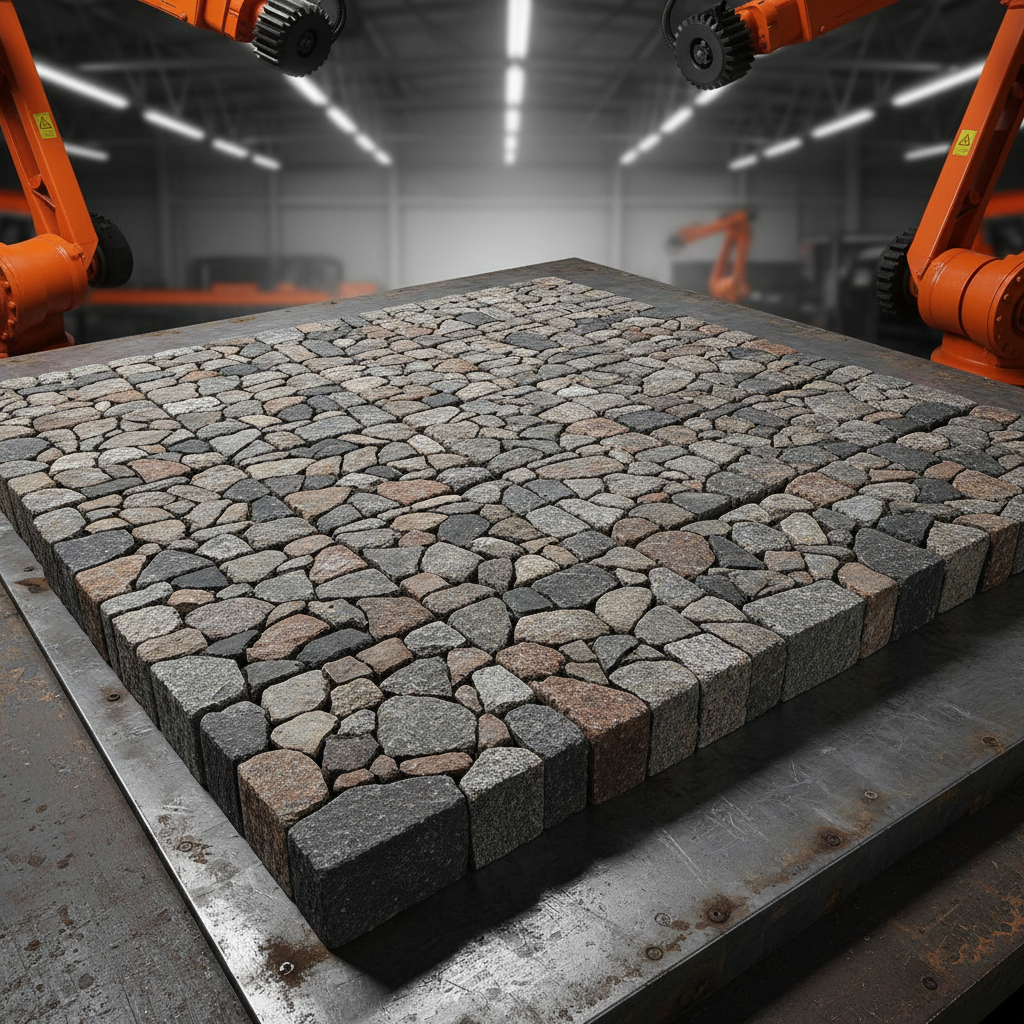
When planning a hardscaping project, understanding the cobblestone price per square foot is essential for accurate budgeting and material selection. This cost is not a fixed number but a variable influenced by the type of stone, the finish—whether polished or natural—and the overall scope of the installation. For most homeowners and commercial developers, the price reflects a balance between the raw material cost and the labor required for precise placement.
Many property owners struggle with unexpected costs during the paving process due to a lack of clarity regarding material grades and site preparation. Whether you are aiming for a rustic garden path or a high-traffic commercial lobby, the variance in stone quality and processing significantly impacts the final investment. Choosing the wrong grade can lead to premature wear or an aesthetic that does not match the architectural intent.
This comprehensive analysis will guide you through the factors that dictate pricing, the differences between ordinary and high-grade polished stones, and practical tips for procurement. By the end of this article, you will be able to evaluate quotes more effectively and select a cobblestone solution that optimizes both longevity and visual appeal for your specific environment.

1Understanding Cobblestone Pricing Fundamentals

The cost of cobblestone is primarily driven by the extraction method and the level of processing the stone undergoes. Raw, split-face stones generally sit at the lower end of the price spectrum, while stones that are precision-cut or polished require significantly more machinery hours and labor, driving up the price per square foot. Additionally, the rarity of the stone's color and mineral composition plays a role in market valuation.
Logistics also contribute heavily to the final quote. Because stone is exceptionally heavy, shipping costs can fluctuate based on the distance from the quarry to the job site. For international procurement, tariffs and freight charges must be integrated into the total square footage calculation to avoid budget overruns.
Finally, the quantity ordered often affects the unit price. Bulk purchases for commercial landscaping typically enjoy wholesale discounts, whereas small residential projects may pay a premium for retail-grade selections and smaller delivery loads.
2Material Grades: Ordinary vs. High-Grade Polished Stone
Ordinary polished stone is designed for durability and utility. It is the standard choice for outdoor floor paving, such as courtyards, sidewalks, and public gardens. Its primary strengths lie in its wear resistance and ease of cleaning, making it capable of withstanding harsh weather conditions and heavy foot traffic without significant degradation.
In contrast, high-grade polished stone is engineered for interior luxury. These stones undergo a more rigorous polishing process to achieve a smooth, bright texture that enhances the ambient lighting of a room. This grade is typically reserved for high-end lobbies, corridors, and living rooms where the stone serves as a piece of architectural art.
Beyond flooring, high-grade polished stone is frequently used for carved artworks, sculptures, and reliefs. This versatility allows it to provide an elegant atmosphere to a space, although it usually comes with a higher price per square foot due to the precision required in its refinement.
3Application Scenarios and Their Cost Implications
The application environment dictates which material is most cost-effective. For outdoor walkways and pool edges, the focus is on slip resistance and durability. Here, natural or lightly polished cobblestones are preferred. The cost is lower per unit, but the preparation of the sub-base (sand and gravel) is a critical cost factor to prevent shifting over time.
For indoor settings, the installation process changes. High-grade polished stones are typically set using mortar or adhesives on a concrete slab. This reduces the need for deep excavation but increases the cost of materials and the precision required for the layout to ensure seamless joints.
Specialty applications, such as fish tank decoration or unique garden artworks, utilize smaller pebbles and polished stones. These are often sold by weight or volume rather than square footage, but they provide an attractive, versatile decorative option for both commercial and personal home decoration.
4Performance Metrics and Value Analysis
Evaluating the value of cobblestone involves looking beyond the initial price per square foot. Long-term value is measured by the stone's ability to resist fading and its structural integrity over decades. High-quality treated stones maintain their appearance regardless of whether they are used indoors or outdoors, reducing the need for replacement.
When comparing industry averages, premium cobblestones offer a higher initial investment but significantly lower lifecycle costs. This is due to their superior density and resistance to chemical corrosion, which is particularly important in urban environments where salt and pollutants are common.
cobblestone price per square foot Performance Metrics
The data indicates that while the installation phase for high-grade stone may be more complex, the gains in aesthetics and durability provide a higher return on investment (ROI) for property value increases, especially in commercial real estate projects.
5Procurement Strategy for Large-Scale Projects
For procurement teams, the goal is to balance quality with budgetary constraints. The first step is defining the precise requirement: is the area subject to heavy vehicle loads or light pedestrian traffic? This determines whether a rugged, ordinary polished stone or a refined, high-grade stone is necessary.
Working with a supplier that provides a diverse range of mineral products—such as volcanic stone, zeolite, and perlite—can often lead to better bundled pricing and more cohesive landscape design solutions. A trusted partner ensures that each piece of stone is carefully selected for consistency in color and shape.
Quality assurance is paramount. Procurement should verify that the stones are specially treated to be smooth and fade-resistant. Requesting samples of different grades allows the design team to verify the "natural beauty" and "artistic charm" mentioned in technical descriptions before committing to a full order.
6Maintenance and Long-Term ROI Considerations
The long-term cost of ownership for cobblestone is remarkably low compared to asphalt or wood decking. However, maintenance varies by grade. Ordinary polished stone used outdoors may require occasional power washing to remove organic buildup, but its inherent corrosion resistance keeps it functional for decades.
Indoor high-grade polished stone requires different care. To maintain the bright, smooth texture, periodic sealing is recommended to prevent stains from penetrating the pores of the stone. This preserves the "high-quality ambience" that initially justified the higher price per square foot.
From an ROI perspective, cobblestone is an asset. It increases the curb appeal of residential properties and the prestige of commercial entrances. Because it does not fade easily and maintains its structural form, it is considered a permanent improvement rather than a temporary fixture.
7Comparison Guide for Stone Selection
Selecting the right cobblestone requires a side-by-side comparison of the available options. The following table breaks down the key differences between the most common grades to help you determine which fits your budget and application.
While the price per square foot is a primary filter, the "Typical Fit" column should be the deciding factor to ensure the material performs as expected in its intended environment.
| Stone Grade | Primary Use | Key Strength | Price Impact |
|---|---|---|---|
| Ordinary Polished | Outdoor Paving | Wear Resistance | Moderate |
| High-Grade Polished | Interior Lobbies | Aesthetic Brilliance | High |
| Natural Cobble | Rustic Gardens | Natural Appearance | Low to Moderate |
| Decorative Pebbles | Aquariums/Borders | Versatile Color | Variable |
| Volcanic Stone | Landscaping | Porous/Moisture Retent. | Moderate |
| Carved Art Stone | Sculptures | Artistic Detail | Very High |
Ultimately, the best choice is one that aligns with the functional requirements of the space. For more information on high-quality stone products and industrial minerals, you can review the available product information at www.lsxcigna.com.
Frequently Asked Questions
Conclusion
Determining the cobblestone price per square foot is a critical first step in any architectural or landscaping project. By distinguishing between ordinary polished stone for utilitarian outdoor use and high-grade polished stone for interior luxury, you can allocate your budget more effectively without compromising on quality or durability.
Investing in high-quality, specially treated stone ensures that your space maintains its natural beauty and structural integrity for years to come. For those seeking professional-grade minerals and stone solutions for agriculture, horticulture, or construction, exploring a wide range of materials at www.lsxcigna.com can help you find the ideal match for your project requirements.