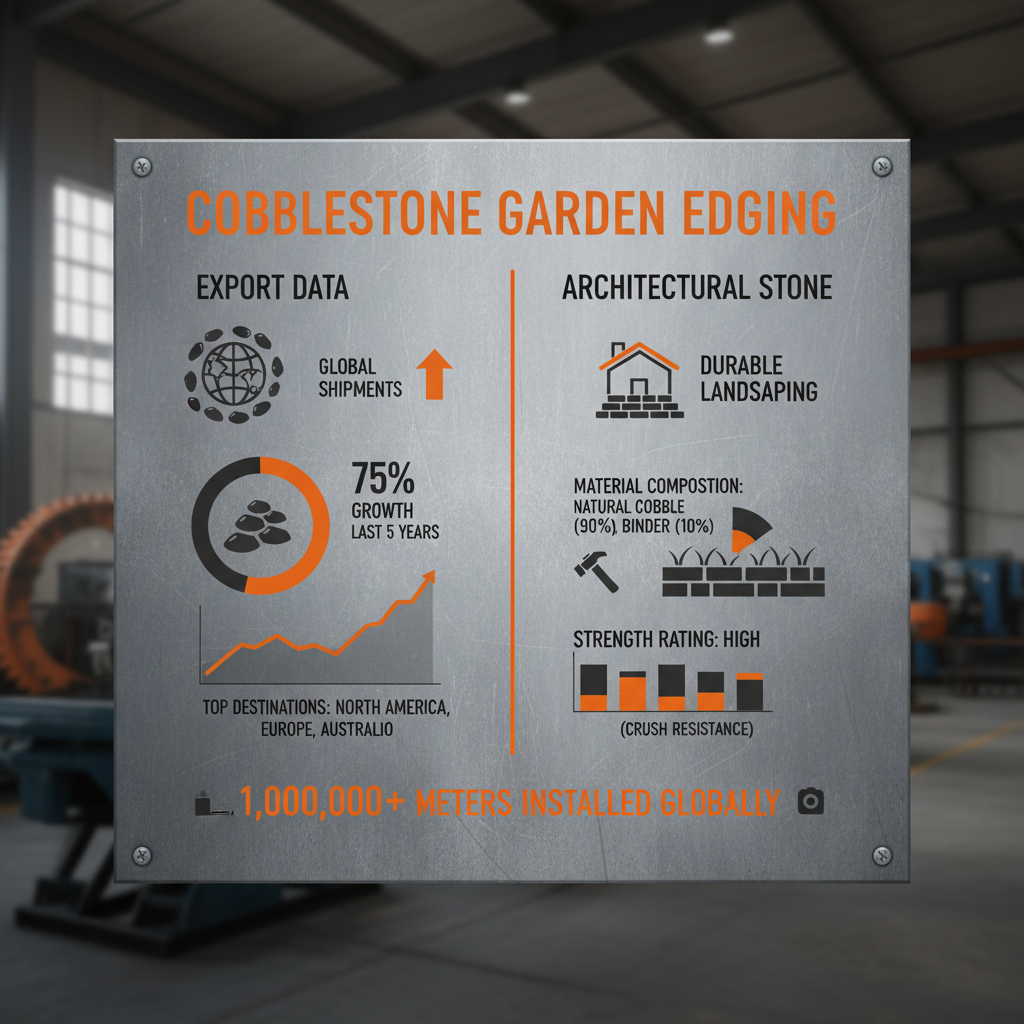
Integrating cobblestone garden edging into modern landscape design offers a timeless blend of rustic charm and structural integrity. Beyond mere aesthetics, these stone boundaries serve a critical functional purpose by preventing soil erosion and clearly delineating the transition between manicured lawns and cultivated garden beds. In an era where sustainable urban greening is paramount, choosing natural mineral-based edging reduces the reliance on synthetic plastics and enhances the ecological value of the outdoor space.
From a global perspective, the demand for high-quality mineral products in landscaping has surged as homeowners and commercial developers seek materials that withstand extreme weather patterns. Whether it is the freeze-thaw cycles of Northern Europe or the intense heat of subtropical regions, cobblestone remains a preferred choice due to its inherent durability and thermal stability. Understanding the nuances of material selection and installation ensures that the beauty of a garden is preserved for decades rather than seasons.
By focusing on the synergy between industrial precision and natural beauty, the use of cobblestone garden edging transforms a simple backyard into a curated architectural statement. This guide explores the technical specifications, global applications, and long-term value of incorporating these non-metallic mineral products into contemporary environmental designs, providing a comprehensive resource for designers and property owners alike.
The Global Industry Context of Cobblestone Garden Edging
The global market for non-metallic mineral products has seen a significant shift toward high-performance landscaping solutions. According to industry trends aligned with ISO standards for building materials, there is an increasing preference for natural stone over composite polymers. cobblestone garden edging sits at the intersection of this shift, offering a low-carbon alternative that minimizes the environmental footprint of urban development.
However, the industry faces a recurring challenge: the balance between raw material authenticity and the need for standardized dimensions. Traditional hand-cut stones often vary too much for rapid commercial installation, leading to higher labor costs. Modern manufacturing in the non-metallic mineral sector has solved this by introducing precision-cut cobblestones that retain their organic look while fitting together with architectural accuracy.
Defining Cobblestone Garden Edging in Modern Landscaping
In technical terms, cobblestone garden edging refers to the strategic placement of small, rounded or squared mineral blocks along the perimeter of a garden bed, walkway, or patio. Unlike plastic or metal strips, cobblestones provide a physical mass that prevents soil migration and grass encroachment, ensuring that garden borders remain crisp and well-defined without constant manual trimming.
From an industrial standpoint, these products are derived from high-density non-metallic minerals, often processed to ensure resistance to water absorption and chemical weathering. This makes them indispensable for modern humanitarian and urban projects where infrastructure must be built to last with minimal maintenance. The connection between traditional masonry and modern engineering allows these edges to serve as both a decorative element and a structural containment system.
Ultimately, this edging is not just about "lining a garden"; it is about managing the interface between different land-use zones. By implementing a robust mineral barrier, property owners can reduce water runoff and create a more stable environment for plant root systems, bridging the gap between raw nature and intentional human design.
Core Components for Maximum Durability and Appeal
The efficacy of cobblestone garden edging depends heavily on the mineral composition of the stone. Granite, basalt, and limestone are common choices, each offering different levels of hardness and porosity. Selecting a stone with a low water absorption rate is crucial for preventing cracks during winter freeze-thaw cycles, ensuring the edging remains intact for decades.
Another critical factor is the bedding material. For a professional finish, cobblestones should be set upon a compacted base of crushed stone or sand. This layer distributes the weight of the cobblestone garden edging and prevents the stones from sinking unevenly into the soil, which is a common failure point in amateur installations.
Finally, the jointing method—whether using polymeric sand or traditional mortar—determines the overall stability and weed resistance. Polymeric sand is highly recommended for modern gardens as it hardens upon contact with water, creating a flexible yet firm bond that locks the cobblestones in place while inhibiting the growth of opportunistic weeds between the gaps.
Global Applications and Real-World Use Cases
Across different continents, cobblestone garden edging is utilized to solve specific regional landscaping challenges. In the historic districts of Europe, it is used to maintain the heritage aesthetic while providing modern drainage solutions. In North American suburban developments, it is frequently employed to increase property value by adding "curb appeal" and creating permanent, low-maintenance borders for expansive flower beds.
In more extreme environments, such as remote industrial zones or post-disaster relief housing projects, mineral-based edging is used to stabilize soil around temporary structures. Because these materials are locally sourced and naturally durable, they provide a reliable way to manage mud and water runoff without requiring expensive imported synthetic materials, proving that the utility of cobblestone extends far beyond luxury gardening.
Performance Comparison of Cobblestone Garden Edging Methods
Long-Term Value and Sustainable Advantages
Investing in cobblestone garden edging yields significant long-term financial and environmental dividends. Unlike plastic edging that degrades under UV exposure and must be replaced every few years, natural stone is practically permanent. This eliminates the recurring cost of materials and labor, making it a more cost-effective solution over a ten-year horizon.
Beyond the finances, the social and emotional value of using natural minerals cannot be overstated. There is a psychological sense of stability and permanence associated with stone. Furthermore, by utilizing non-metallic mineral products, homeowners contribute to a reduction in microplastic pollution in the soil, ensuring a healthier ecosystem for pollinators and soil microorganisms, which ultimately leads to more vibrant and resilient gardens.
Future Trends in Mineral-Based Edging Technology
The future of cobblestone garden edging is being shaped by digital transformation and sustainable manufacturing. We are seeing the rise of CNC (Computer Numerical Control) precision cutting, which allows for interlocking cobblestone designs that require less mortar and provide even greater stability. This "modular" approach to stone edging reduces installation time and allows for more complex, flowing geometric patterns in landscape design.
Sustainability policies are also driving the industry toward "closed-loop" mineral sourcing. Recycled stone aggregates are being blended with natural binders to create high-strength, eco-friendly cobblestones that maintain the aesthetic of natural rock while reducing the need for new quarrying. This shift aligns with global green energy goals by lowering the carbon footprint associated with the transport and extraction of heavy minerals.
Additionally, the integration of "smart" landscaping is beginning to influence edging. Some designers are exploring the placement of low-voltage LED lighting strips directly beneath the cobblestone garden edging, creating a floating glow effect that enhances safety and nighttime aesthetics. This convergence of traditional masonry and modern technology ensures that cobblestones remain relevant in the smart-home era.
Overcoming Common Installation Challenges
One of the primary challenges with cobblestone garden edging is the initial labor intensity. Many homeowners find the process of digging a trench and leveling the base to be daunting. However, the solution lies in proper planning and the use of specialized tools, such as plate compactors and laser levels, which ensure the base is perfectly flat, preventing the "wavy" look that plagues poorly installed stone borders.
Another common issue is the emergence of weeds in the joints. While some view this as a natural look, others find it distracting. The most effective professional solution is the use of high-grade polymeric sand. By sweeping this material into the joints and activating it with a fine mist of water, you create a hard, rubberized seal that is nearly impenetrable by weed seeds and resists washout during heavy rains.
Lastly, managing the curve of the garden bed can be tricky with rectangular stones. The expert approach is to employ a "tapered joint" technique, where the gaps on the outer edge of the curve are slightly wider than the gaps on the inner edge. This maintains a smooth, organic flow to the cobblestone garden edging without requiring the stone to be cut into awkward shapes.
Comparative Analysis of Cobblestone Installation Specifications
| Material Type |
Installation Effort |
Maintenance Level |
Expected Lifespan |
| Natural Granite |
High |
Very Low |
50+ Years |
| Tumbled Limestone |
Medium |
Low |
30-40 Years |
| Volcanic Basalt |
High |
Very Low |
50+ Years |
| Reconstituted Stone |
Low |
Medium |
20-25 Years |
| Sandstone Blocks |
Medium |
Medium |
20-30 Years |
| River Cobbles |
Medium |
Low |
40+ Years |
FAQS
While the initial cost of cobblestone is higher due to material and installation labor, it is significantly cheaper over time. Plastic edging often warps, cracks, or becomes hidden by soil, requiring replacement every 3-5 years. Cobblestone is a permanent installation that increases property value and requires almost zero replacement costs for the lifetime of the garden.
Yes, it is possible for a DIYer, provided you have the right tools. The key is the foundation; if you skip the compacted gravel base, the stones will shift. We recommend using a string line for straight edges and a flexible garden hose to map out curves before digging. For very large projects, professional installation ensures a perfectly level finish.
The most effective method is using polymeric sand. Unlike regular sand, polymeric sand contains additives that harden when wet, creating a solid barrier that prevents weed seeds from taking root and stops ants from tunneling. Regular sanding should be avoided if you want a maintenance-free border.
High-quality mineral stones like granite and basalt are highly resistant to freeze-thaw cycles. The risk of cracking usually comes from water pooling under the stones. By ensuring a well-draining base of crushed stone and proper sloping, you can prevent the heaving that causes stone borders to shift or crack during winter.
Absolutely. Because cobblestones have significant mass, they act as a physical retaining wall on a small scale. They prevent mulch and soil from washing onto walkways during heavy rainfall and keep the root systems of your plants contained and protected from erosion.
For a traditional, rustic look, warm tones like tan limestone or mixed river cobbles are ideal. For a modern, minimalist aesthetic, charcoal basalt or light grey granite provides a sharp, clean contrast that complements contemporary architecture and manicured lawns.
Conclusion
In summary, cobblestone garden edging represents a superior fusion of industrial durability and natural elegance. By addressing the core needs of soil stability, weed management, and aesthetic appeal, mineral-based edging outperforms synthetic alternatives in every long-term metric. From the selection of high-density granite to the application of polymeric sand, every technical detail contributes to a landscape that is not only beautiful but ecologically responsible and structurally sound.
As we move toward more sustainable urban living, the shift back to natural mineral products is more than a trend—it is a necessity for durable infrastructure. Whether you are a professional landscaper or a dedicated homeowner, investing in quality stone edging is an investment in the longevity of your land. We encourage you to explore a variety of mineral textures and colors to find the perfect match for your environment. Visit our website for more professional insights: www.lsxcigna.com